
Tanzania itinerary for 2 weeks: Safari and Zanzibar
With its wildlife-filled savannas, unspoiled landscapes and tropical beaches, Tanzania is a country of amazing natural beauty. It’s known as one of the best safari destinations in the world, so if you’ve ever dreamt of seeing African wildlife up close, this is your place!
My trip to Tanzania was an experience of a lifetime. Locking eyes with a lion, a hippo, or a massive elephant is something that touches your soul. All these incredible animal encounters made me feel like I’m in a Nat Geo documentary. And getting to unwind on the pearly white beaches of Zanzibar after all these wildlife sightings was a cherry on top.
In this post, I’m sharing my 2-week Tanzania itinerary, which gives you the perfect mix of adventure and relaxation. Spending two weeks in Tanzania is just the right amount of time to experience the wonderful national parks in its mainland and the laid-back island life of Zanzibar.
At the end of this blog post, I’ve also included a map of this Tanzania travel itinerary, so you can get an overview of where everything is located, as well as some tips on other places to visit during your trip, in case you have more than two weeks to spend.
Disclosure: This article contains affiliate links from which I may make a commission at no additional cost to you if you make a purchase.

Tanzania itinerary: How to spend 2 weeks in Tanzania
This Tanzania itinerary starts in the northern part of the country, where you’ll be spending the first week of your trip. You’ll go on a 5-day African safari through the region known as the Northern Circuit and visit some of the most famous national parks of Tanzania. You’ll also do a day trip from Arusha to see some beautiful nature that’s very different from the savanna.
We booked our private safari with Joagro Safaris, a local tour operator based in Arusha, and were really happy with our choice. They were professional and easy to deal with, our guide-driver was very knowledgeable, and the hotels they had booked for us were lovely.
For the second week of this itinerary, you’ll fly to Zanzibar for some rest and relaxation on the dreamy white sand beaches.
Below, I’ll go through all the details for each of the days, including the places you’ll visit, what you can expect to see and where you’ll stay.
Day 1: Arrive in Arusha

The town of Arusha in northern Tanzania is the gateway to the country’s most famous national parks and safari experiences. The best way to get there is to fly to Kilimanjaro International Airport, an hour away from Arusha. Alternatively, you could fly to Nairobi, Kenya, from where it’s a six-hour drive to Arusha.
I recommend arranging a transfer from the airport to Arusha before arriving, either through your hotel or by booking a transfer online. Otherwise, you might end up with a taxi driver with questionable driving skills and a shabby car.
Depending on the time your flight arrives, you might just want to relax and get ready for your safari the next morning or go out and explore Arusha. You can check out the Maasai Market to buy some souvenirs or visit the Cultural Heritage Centre, which displays a huge collection of African art.
Where to stay
Spend the night in Arusha.
MID-RANGE: Tulia Retreat Hotel and Spa – This place offers great value for money. It has beautifully furnished rooms, a lush garden with a swimming pool and a central but quiet location.
LUXURY: Gran Melia Arusha – A 5-star property with a large swimming pool, modern facilities, spacious rooms, and a fantastic view of Mount Meru.
Day 2: Lake Manyara National Park

The second day of your Tanzania itinerary is when you’ll start your 5-day safari adventure! You will be picked up from your hotel by the tour company and head west of Arusha for your safari in the Northern Circuit.
Today will be all about exploring Lake Manyara National Park, which is about a 2-hour drive from Arusha. Here you’ll go on your first game drive through the park’s lush forests and grasslands, see the massive Lake Manyara and hopefully spot lots of wildlife.
The park is known for its tree-climbing lions and a large variety of bird species. Between November and April, you can see huge flocks of pink flamingos gathering on the lake.


Although we didn’t spot the lions and we also weren’t here during the flamingo season, it was still a fantastic start to our safari. The park was packed with animals, including giraffes, baboons, impalas, buffalo, blue monkeys and vervet monkeys.
But the absolute highlight of our game drive here was the many elephants we saw. There were both single elephants and herds with little babies passing us just a meter from our jeep. Seeing them from such a close distance was mind-blowing (and also a little scary, to be honest!).

Where to stay
The safari companies usually book the hotels for you based on your budget and route. We had requested mid-range accommodation and were happy with all the places Joagro Safaris had booked for us.
We spent the night in the town of Karatu, in Bougainvillea Safari Lodge. It’s a 3-star hotel with a well-kept garden, a pool and individual cabins. Our room was perhaps a little outdated, but it was still comfortable. The staff was exceptionally friendly and attentive, and the food was delicious as well.
Day 3-4: Serengeti National Park

On the third and fourth day, you’ll be exploring the iconic Serengeti National Park, a must-visit place on every Tanzania safari itinerary. It’s the country’s oldest and most famous national park and a UNESCO World Heritage Site. Serengeti means ‘endless plains’ in the local Maasai language, which perfectly describes what this place looks like.
The park’s 1.5 million hectares of savanna are home to a large variety of African wildlife, including the Big Five – lion, leopard, elephant, buffalo and rhino. Apart from those, you can expect to see giraffes, hyenas, wildebeests, zebras, cheetahs, ostriches, hippos, leopards and many other animals.


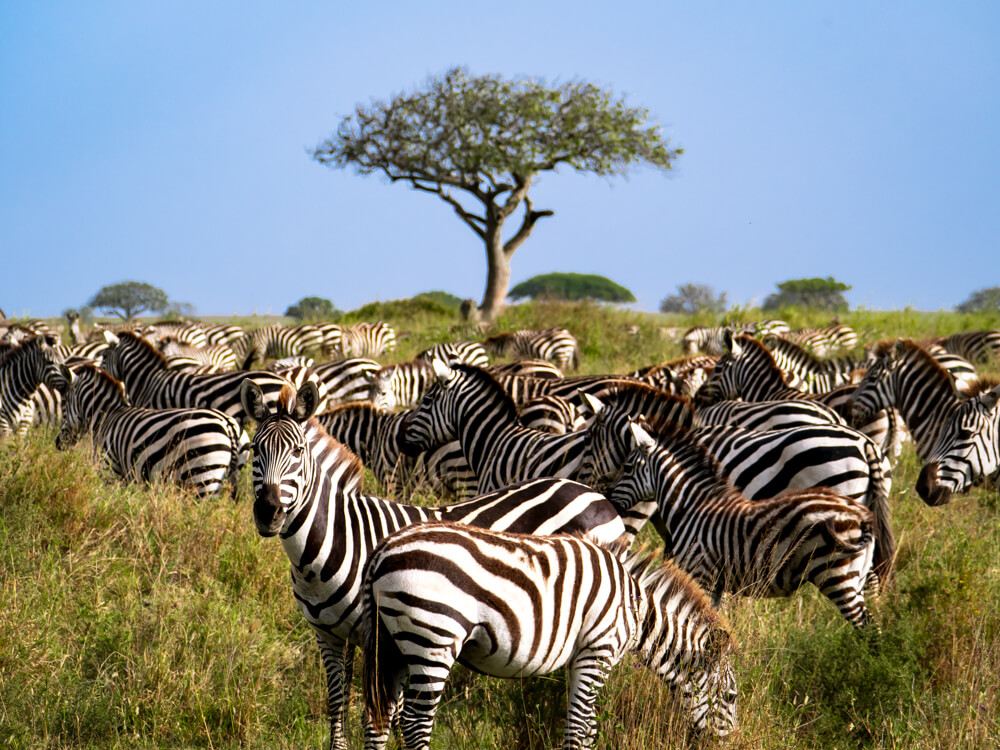
I was truly impressed by the concentration of wildlife in the Serengeti. There were moments during our game drives where I didn’t know which direction to look because there were animals everywhere! Some of our most memorable sightings here were huge herds of zebras, a watering hole jam-packed with hippos, a cheetah hunting impalas, and a lioness dragging around her fresh catch (a baby zebra).


In Serengeti, you also have the option to go on a sunrise hot air balloon safari. Drifting above the savanna and seeing the animals down below sounds like an unforgettable experience, but it didn’t fit into our budget this time.
Serengeti is known for its Great Migration, an annual 1000 km (620 mi) long circular journey that wildebeest, zebras and gazelles make to follow the rains. Although the Great Migration can be viewed throughout the year, the highlight of it is between July and September, when thousands of wildebeest cross the Mara River. If this is something you want to see, let your tour operator know beforehand, so they can plan your route accordingly.
Where to stay
We spent the third night in the middle of the national park, in a tented camp called Serengeti House of Nature. We had a beautiful, spacious safari tent with all the amenities and could hear lions roar outside at night. Definitely an experience to remember!
On the fourth night, after leaving Serengeti, we stayed at Ngorongoro Wild Camp. It’s a lovely property amidst nature, in the Ngorongoro Conservation Area, which is home to a large number of Maasai people. We slept in a large and nicely decorated safari tent built on stilts and watched a herd of zebras pass below it in the evening!
Day 5: Ngorongoro Crater

Today you’ll go on a game drive inside the fascinating Ngorongoro Crater. With a diameter of about 19 km (12 mi), it is the world’s largest intact volcanic caldera and was formed 2.5 million years ago after a huge volcano collapsed in on itself. It’s one of the 7 Natural Wonders of Africa and should be a part of every safari holiday in Tanzania.
Often referred to as Africa’s Garden of Eden, this ancient crater is a sanctuary to a large amount of wildlife. It is estimated that about 25,000 large mammals live inside it, so there’s a good chance you’ll see lots of animals here, from lions and hyenas to hippos, zebras, elephants and more. The Ngorongoro Crater is also considered the best place in East Africa to see the critically endangered black rhino. We did spot one here, but it was unfortunately very far.


The crater floor consists of savanna, marshes and forested areas, which you’ll explore on your game drive. There’s also a large salt lake, where you can see flamingos and pelicans.
It’s worth noting that Ngorongoro Crater is situated at a pretty high altitude, with the crater rim sitting at 2300 m (7500 ft). This means that it can get a bit chilly here, so you might want to wear warmer clothes. During our visit in July, it was 9°C (48°F) here early in the morning and 19°C (66°F) during the day.


Be sure to also visit the viewpoint near the entrance gate at the crater rim, where you can enjoy a panoramic view of this impressive natural wonder.
Where to stay
We spent the night in the town of Karatu, just like our second night, but this time we stayed at Eileen’s Trees Inn. The grounds of the hotel are beautiful and full of tropical plants. Our room was spacious and well-designed, but the decor was a bit dated. The food at the hotel’s restaurant was the best we had during our whole safari trip.
Day 6: Tarangire National Park

On the last day of your safari, you’ll visit Tarangire National Park. This park is known for its large elephant population as well as its big baobab trees scattered across its grasslands. It’s also hillier than the other parks we went to, which made for a nice change of scenery. As Tarangire is a less-visited park, it offers a more peaceful safari experience with fewer jeeps around.
Tarangire means ‘the river of warthogs’ and the park definitely lived up to its name because we saw more warthogs here than anywhere else. We also spotted various other animals, including elephants, giraffes, wildebeests and lions, but the highlights for me were seeing baby zebras, a large baboon family with their playful babies and a very cute dwarf mongoose, an animal we hadn’t seen before.


In addition to driving around and looking for wildlife, we also visited a giant hollow baobab tree that we could climb into. It is known as the Poacher’s Hide because, in the past, poachers used this tree to hide from rangers.
And this marks the end of your safari. After your game drive in Tarangire, it’s time to head back to Arusha. The safari company will drop you off at your hotel.
In the video below, you can see the highlights from each of the parks we visited on our 5-day Tanzania safari:
Where to stay
Spend the next two nights in Arusha.
I recommend staying at the same hotel as you did on your first night – Tulia Retreat Hotel and Spa (a mid-range option) or Gran Melia Arusha (a luxury option).
Day 7: Hot springs, waterfall and a coffee farm tour

Today it’s time to do something very different from what you’ve been doing in the previous days. Join this full-day tour from Arusha that takes you to beautiful hot springs, a coffee farm and a waterfall.
Your first stop is Chemka Hot Springs. This gorgeous geothermal oasis has clear turquoise water and is surrounded by a palm grove. When we were here, it was a really cloudy day, but I can imagine how vibrant blue the water looks when the sun is out!
The water here is lukewarm and very pleasant for a swim. You can also rent a tube to float around the spring. Be aware that there are tiny fish in the water that will nibble on your body. They are harmless, but I found them really ticklish.
Your second stop is a small coffee farm at the lush foothills of Mount Kilimanjaro. Here, you’ll learn how to make coffee from bean to cup, enjoy a delicious Swahili lunch and learn about the way of life in these rural villages in the area.

Lastly, you’ll hike to the majestic 80-meter (260 ft) tall Materuni Waterfall. The trail leads you through lush mountainous scenery, past banana plantations and coffee farms and ends at the waterfall where you can go for a swim. The total distance of the hike is 5.7 km (3.5 mi).
We really enjoyed this tour and can highly recommend it. The activities were great, our van was really nice, and our guide was knowledgeable and drove very safely.
Where to stay
Spend another night in Arusha.
Day 8-14: Zanzibar
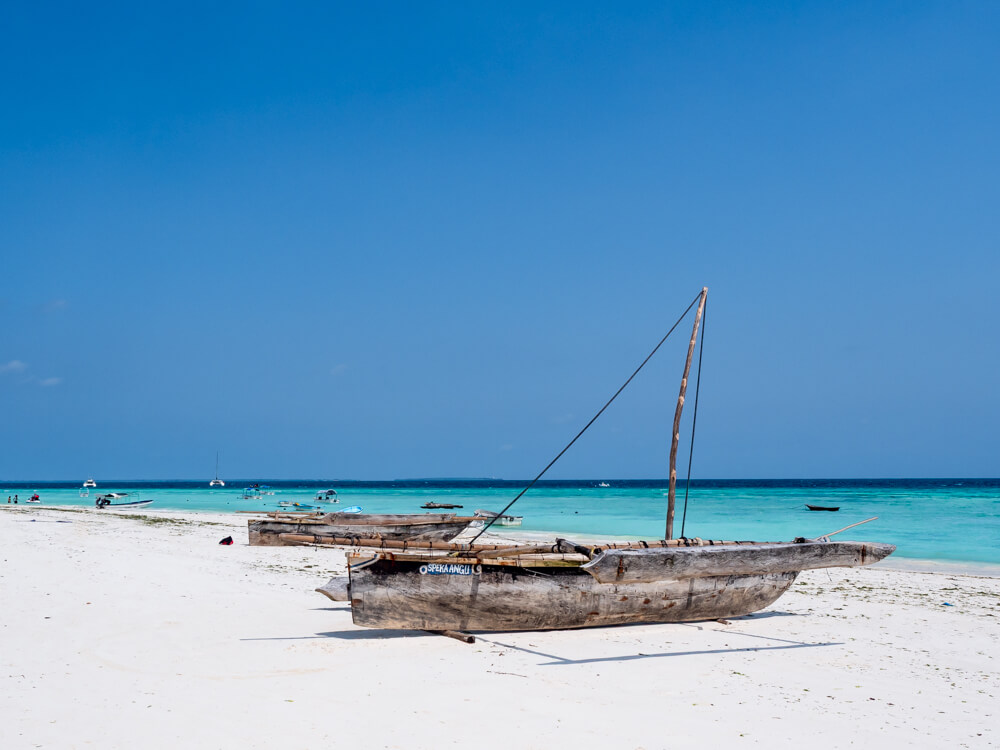
After a week of exploring mainland Tanzania, it’s now time for the second leg of your trip – the wonderful island of Zanzibar. The fastest and easiest way to get there is to fly either from Arusha Airport or Kilimanjaro International Airport. The flight takes about 1 hour and 20 minutes.
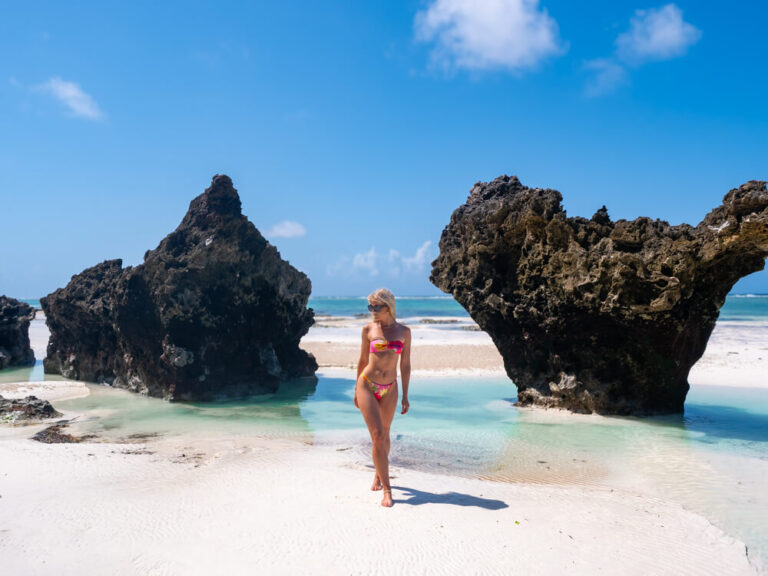
Upon arrival, spend your first day wandering around Stone Town, the UNESCO-listed historic quarter of Zanzibar City. Then head north to Kendwa or Nungwi to spend a couple of days enjoying the fabulous white sand beaches and the buzzing atmosphere of these villages.
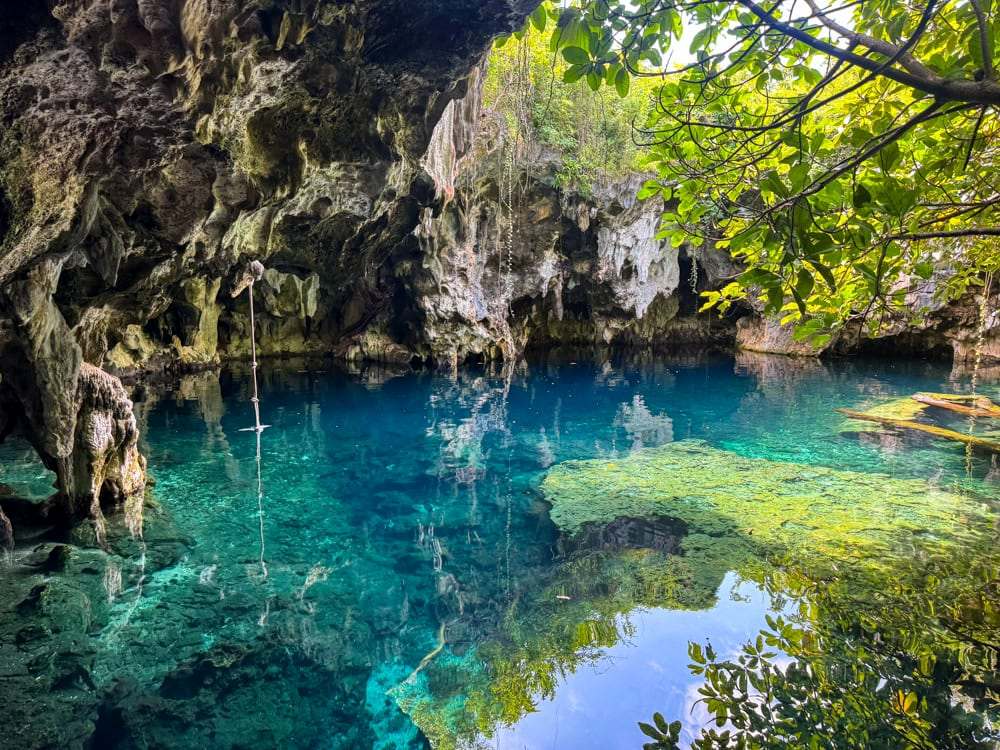
For the final days of your trip, base yourself in Paje. From here, you can explore all the cool places and activities in the southeastern part of the island, including snorkeling with starfish, spotting red colobus monkeys and swimming in the serene Maalum Cave, one of my favorite things to do in Zanzibar.
Be sure to read my separate 7-day Zanzibar itinerary post, where I go into much more detail about what to do on each of the days and which hotels to stay at. I also recommend checking out my detailed Zanzibar travel guide for essential info like how to get your visa and mandatory insurance, how to get around and what to wear.
Tanzania itinerary map
On the map below, you can see all the different stops and hotels of this Tanzania 2-week itinerary. Click on the icon in the top left corner of the map for more details.
Other places to add to your itinerary
If you have more than two weeks to spend in Tanzania or you’re just looking for other places to visit within the country, here are my suggestions:
- Mahale Mountains National Park – Located on the eastern shore of Lake Tanganyika, this off-the-beaten-path park has pristine rainforest and waterfalls and is home to a large population of chimpanzees.
- Mount Kilimanjaro – This is the highest mountain in Africa. It takes 5-9 days to hike to its summit, but you can also do a day hike at the base of the mountain to get a taste of its nature.
- Mafia Island – This island is much ‘wilder’ and less developed than Zanzibar, and is known as the best place for scuba diving in Tanzania because of its pristine coral reefs and whale sharks.
- Pemba Island – Compared to Zanzibar, Pemba is less developed and offers a more tranquil and authentic atmosphere. It is nicknamed ‘the Green Island’ due to its lush, hilly landscapes and forests.
- Selous National Park – The largest protected game reserve in Africa and one of the best areas in Tanzania to see African wild dogs.
So there you have it – my two-week Tanzania itinerary that combines African safari with a beach vacation in Zanzibar. I hope that you found this post helpful and that it gave you some ideas for planning your own trip.
As always, if you have any questions or comments about this itinerary, drop them in the comments below.
Don’t forget to read my other Tanzania blog posts for more useful travel tips:
Pin this Tanzania itinerary!

READ MORE:


Hi, it seems like a really nice itinerary! From what you have observed, do you feel like it would be appropriate for kids too?
Hi Julie. In general, I do think it would be a great itinerary for traveling with kids but it also depends on their age. Materuni Waterfall hike might be too long for small kids. Also, during the safari, you’ll spend a lot of hours in the car, which might be an issue for some kids.
Can you recommend specific tour that you booked with the travel company? And what was the cost for this trip approximately?
I don’t see this exact tour on their website anymore, but I’m sure they can offer it to you if you just write to them. The price for our 5-day/4-night safari was about 3400 USD. I believe this price is flexible and depends on which hotels you stay at, so you can just talk to them to find a good fit for your budget.
Ok thank you. 3400 usd is pp or for a couple?
For a couple. And this was a private safari. A group safari would be cheaper.