Albanian Alps travel guide: Visit Albania’s majestic mountains
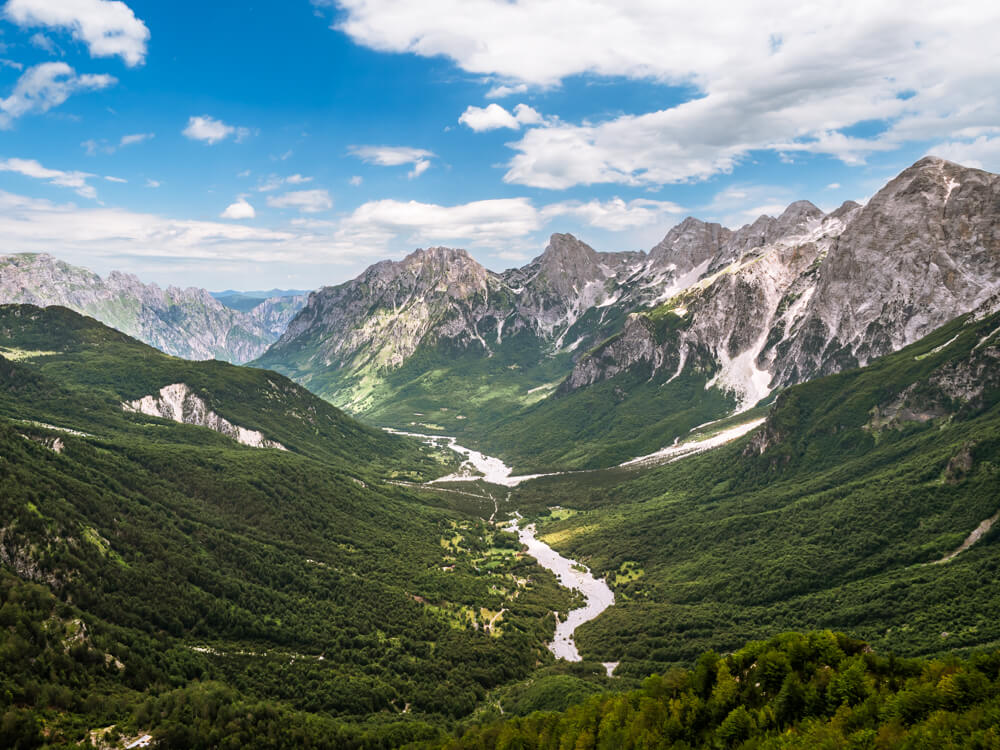
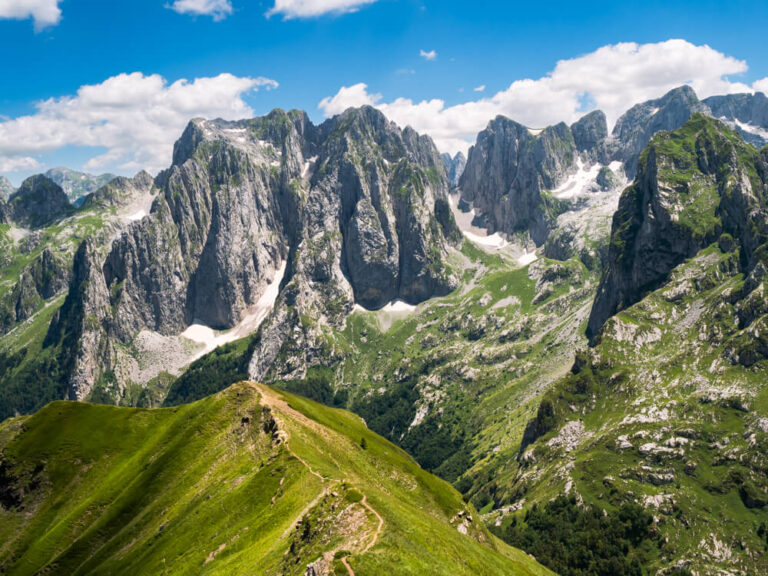
Towering mountains, tranquil valleys, turquoise rivers and idyllic little villages – this is what comes to my mind when I think about my time in the Albanian Alps. I spent five days exploring this fantastic corner of Albania, and it ended up being the absolute best part of my Albania trip.
Because of its stunning rugged landscapes, the Albanian Alps are a paradise for hiking, but there’s also plenty of other experiences to be had here, from wild swimming spots and waterfalls to scenic drives through the mountains and relaxing stays in cozy guesthouses.
In this Albanian Alps travel guide, I’ll go through everything you need to know to plan your trip to this magnificent region, including the most beautiful places to visit, best hiking trails, advice on how to get there, where to stay and more.
Disclosure: This article contains affiliate links from which I may make a commission at no additional cost to you if you make a purchase.
General info about the Albanian Alps

The Albanian Alps, also known as the Accursed Mountains, are located in northern Albania and are part of the Dinaric Alps mountain chain that stretches across several Balkan countries.
With their dramatic limestone mountains, deep river valleys and winding mountain roads, the Albanian Alps are a wonderful budget-friendly and less crowded alternative to the more popular mountain destinations like the Dolomites or the French Alps.
It’s a remote, rural region with small villages, where the traditional way of life remains the norm and sheep herding, agriculture and tourism are the main sources of livelihood.
How to get to the Albanian Alps
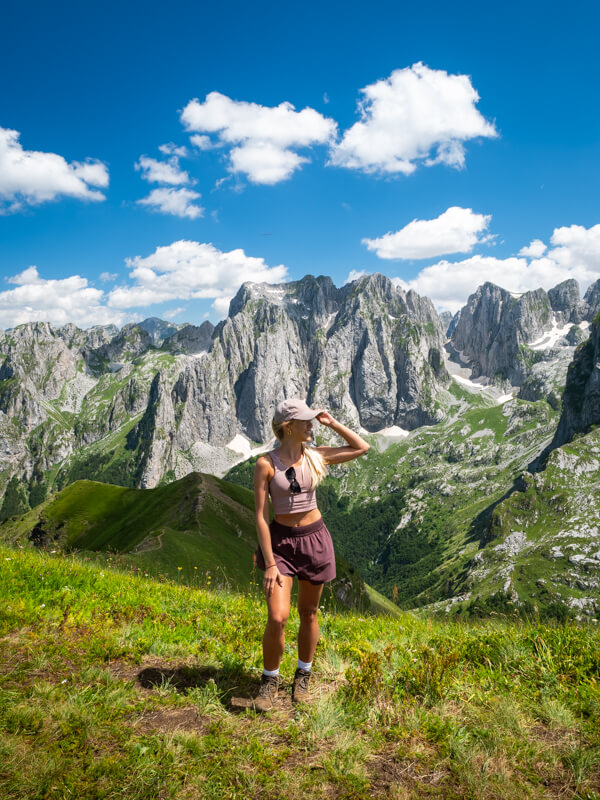
Most people start their Albania trip by flying into Tirana, the capital of the country. From there, you should take a bus (about 2 hours) or drive (1.5 hours) to Shkoder, the largest city in northern Albania and the gateway to the Albanian Alps.
Your journey onwards from Shkoder depends on which parts of the Albanian Alps you want to visit. I would categorize the main areas of interest in the Albanian Alps the following way:
- Kelmend region
- Theth and Valbona
- Komani Lake and Shala River
To get to these destinations, you can either drive, take shuttles or join tours.
Traveling by car
Renting a car is the best way to explore the Albanian Alps, since it gives you the flexibility to get to the more remote places and be in control of your schedule. This is what we did, and we were very happy with our decision. However, if you’re an anxious or inexperienced driver, it’s probably better to opt for shuttles since the mountain roads can be narrow, curvy and steep.
We rented our car through DiscoverCars and picked it up at Tirana Airport. We chose an SUV, and it was perfect for our Albania road trip. A 4×4 is not necessary to visit the Albanian Alps, since most of the roads you’re likely to take are now paved, but it can provide extra comfort.
Taking shuttles or tours
The popular destinations in the Albanian Alps, such as Theth, Valbona, Komani Lake and Shala River, are well connected to Shkoder by daily minibus shuttles and transfer services. This shuttle service is an excellent option to book your transport to any of these destinations, as well as back to Shkoder. (Click on the ‘Show all options’ button on their page to see all of their routes.)
However, the Kelmend region in the far north of Albania, which was my favorite part of my Albanian Alps adventure, is more rural, remote and less visited. It doesn’t have any tourist shuttles, and it’s not possible to explore it by public transport. If you’re not renting a car, your best option to visit that region is to take this guided 3-day tour of Kelmend.
Albanian Alps map
On the map below, you can see where the main points of interest in the Albanian Alps are located.
Top things to do in the Albanian Alps
Whether you’re into hiking or just want to immerse yourself in the beautiful wild nature, the Albanian Alps are the perfect destination for those who love the outdoors. Below, I’ve rounded up the best things to do and see in the region.
1) Go hiking in the mountains
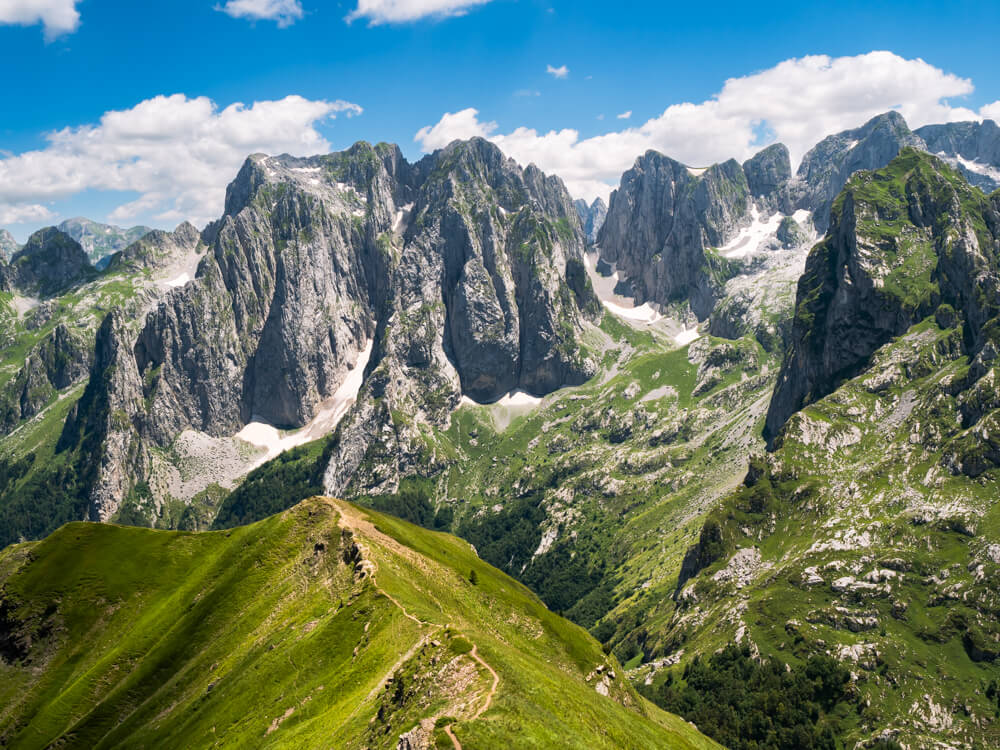
With their dramatic peaks and rugged beauty, the Albanian Alps are undoubtedly the best place for hiking in Albania. There are numerous trails to choose from, but here are the most notable ones:
- Vajusha Peak hike (Maja e Vajushes): My favorite hike in Albania. It’s an 8.5 km (5.3 mi) trail in the Kelmend region, near the Montenegrin border, leading you to a peak with a phenomenal view of the Accursed Mountains. Find all the information about this hike in my Maja e Vajushes hiking guide.
- Valbona Pass hike: By far the most famous hike in Albania. The trail connects the villages of Theth and Valbona and offers an amazing view of the Valbona Valley from the top of the pass. It can be done either as a 17 km (10 mi) point-to-point hike from one village to another or as a 14 km (8.7 mi) out-and-back hike, where you hike up to the pass and back down the same way. If you’re renting a car, as we did, choose the out-and-back option because you need to get back to your car.
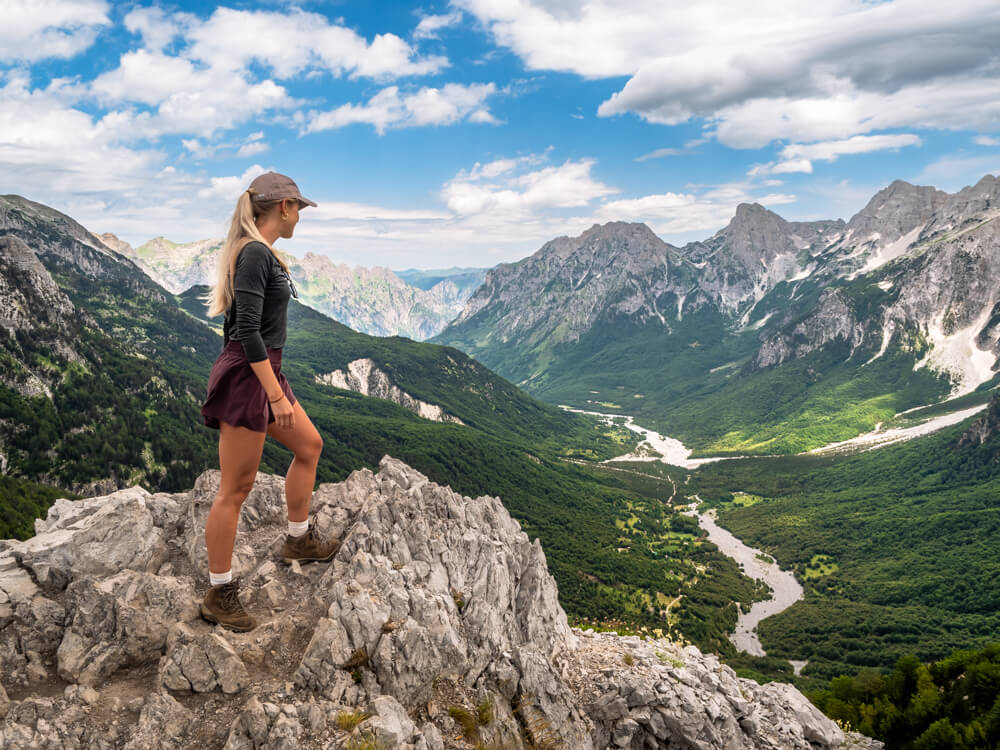
- Jezerca Lakes hike (Buni i Jezerces): A long and difficult hike from Theth or Valbona that leads to a group of six remote glacial lakes surrounded by mountains. It’s usually done over 2 days by camping overnight at the lakes and is about 39 km (24 mi) round-trip, if starting from Theth.
- Rosni Peak hike (Maja e Rosit): A 16 km (10 mi) out-and-back summit hike from Valbona leading you to Rosni Peak on the border between Montenegro and Albania, with striking views of sharp limestone peaks and alpine valleys.
- Peja Pass hike (Qafa e Pejës): A 15 km (9 mi) out-and-back hike from Theth through remote alpine scenery with impressive views of Theth Valley and Peja Lake.
2) See the Blue Eye of Theth
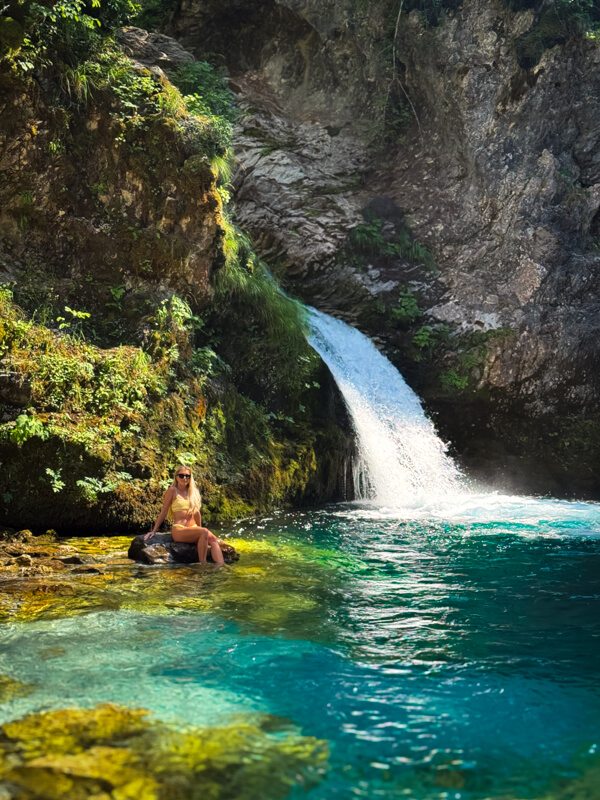
The Blue Eye (or Syri i Kalter in Albanian) is a natural pool in the mountains near Theth and one of the most popular attractions in the area. It’s fed by a small waterfall and has the most beautiful crystal-clear water in various shades of turquoise. The water is absolutely freezing though (between 5-8°C or 41-46°F), and only the bravest ones dare to go in. Dipping my toes in was enough for me to feel refreshed.
Just before arriving at the Blue Eye, there’s an area along the banks of a beautiful turquoise river, where you can relax, go for a swim or jump from a bridge into the river.
To get to the Blue Eye, you have to hike for about an hour on an uneven, rocky trail from the hamlet of Nderlysaj.
3) Swim in Nderlysaj natural pools

The natural pools of Nderlysaj (Vaskat Nderlysaj in Albanian) are located in the Nderlysaj hamlet, at the start of the trail to the Blue Eye, and make for a perfect swimming spot in the heat of the Albanian summer. The pools have an amazing turquoise color and the setting between towering mountains and lush nature is just spectacular.
I found the water here to be warmer than in the Blue Eye, and I was actually able to enjoy my swim here, though it’s definitely still on the chilly side.
The largest pool is easily accessible and is located right next to a parking lot and several cafes. If you’re looking for more privacy, you can find smaller, more secluded pools upstream. I recommend stopping here after your hike to the Blue Eye.
4) Explore the village of Theth
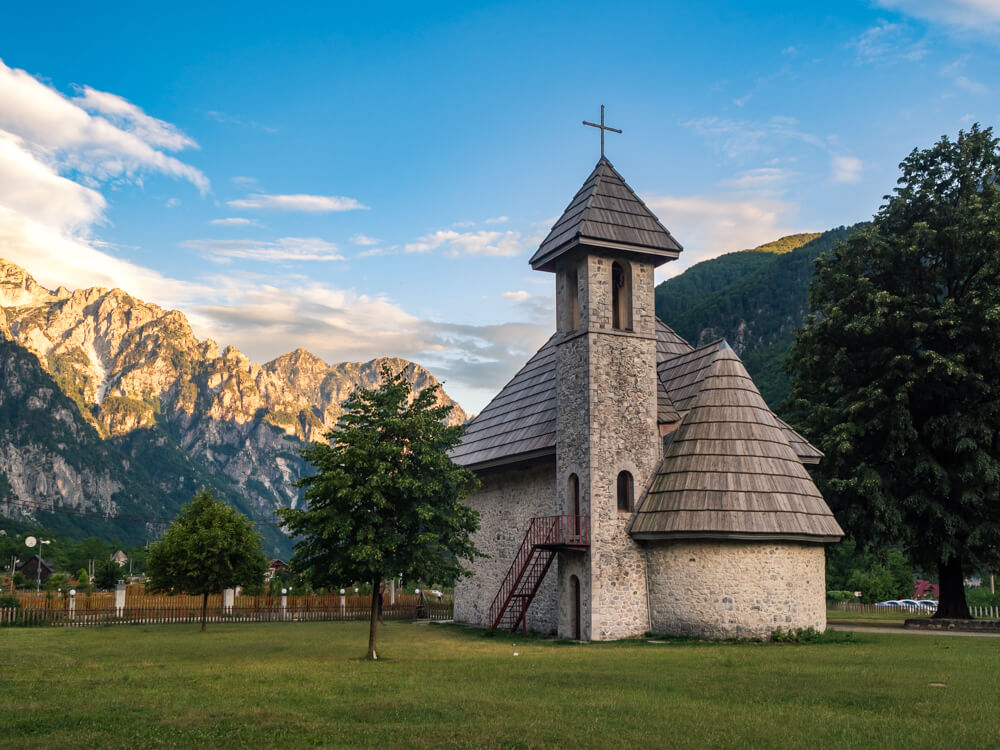
The charming alpine village of Theth is a must-visit place on any Albanian Alps trip. Because of its picturesque location in a steep valley, surrounded by soaring peaks, it reminded me of Chamonix in the French Alps, though it’s much smaller and less developed.
Theth is a perfect base for hikes in the mountains around Theth, but it’s also worth visiting if you’re not planning to hike. The drive into the village is very scenic, with some magnificent views of peaks and valleys. Visiting the Church of Theth and the Reconciliation Tower offer a glimpse into the local culture, and the ride on the Thethi zipline provides a fun little adrenaline rush.
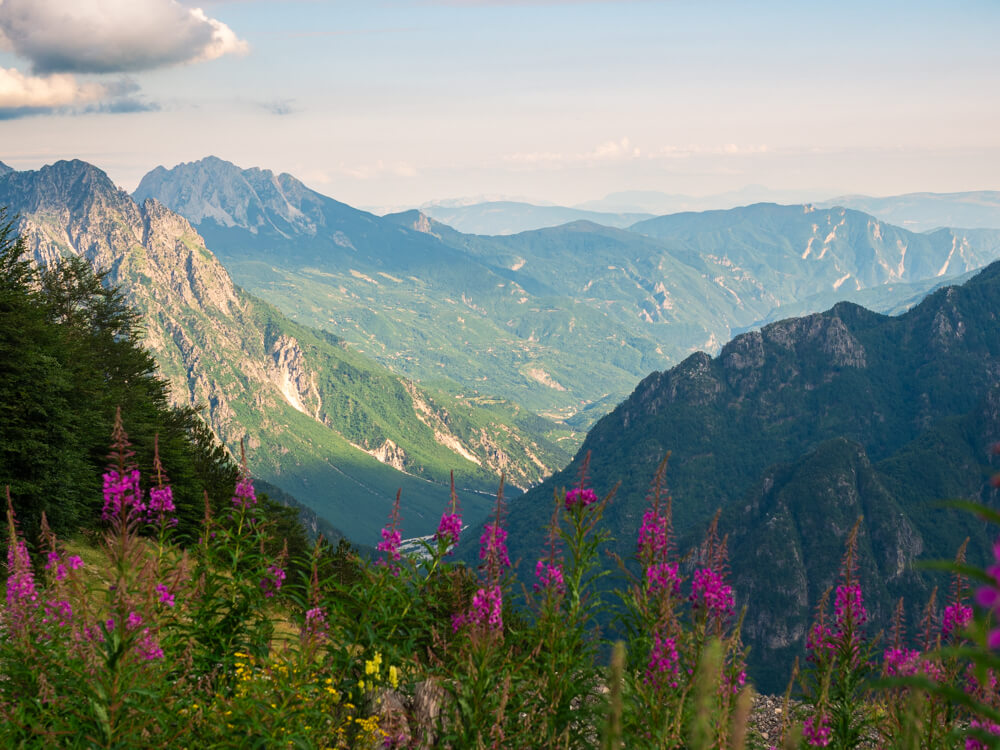
Together with the nearby Blue Eye, Nderlysaj pools and Grunas Waterfall (more about this place later), there’s plenty to keep you busy for a few days. But if you only have one day to explore the area, this full-day tour of Theth from Tirana or Shkoder is a great option.
Due to its growing popularity, Theth has seen a lot of development in recent years and now has dozens of guesthouses, small hotels and restaurants, and a paved road leading to it from Shkoder. Despite being a tourist hub, the village still has a nice rural atmosphere and alpine vibe, and I really enjoyed our time there.
5) Relax at Lumi i Shales & Komani Lake
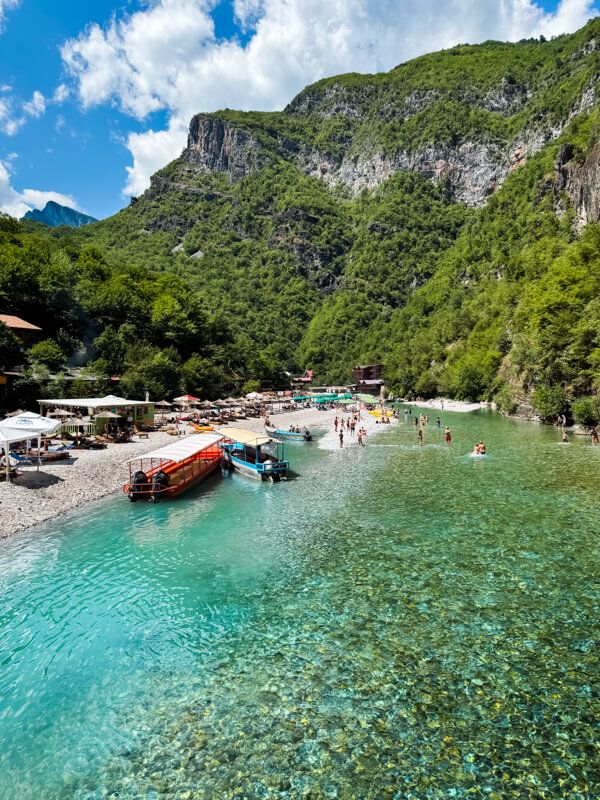
Lumi i Shales, or Shala River, is a river beach hidden in a canyon near Komani Lake. With its mesmerizing blue-green water, steep mountains and lush vegetation, it’s a place of amazing natural beauty and one that should be a part of every Albania itinerary. Here you can spend the day sunbathing, swimming, kayaking or sipping cocktails by the beautiful river.
Getting to Lumi i Shales requires taking a boat across Komani Lake, which is a very scenic journey. This area is sometimes referred to as the ‘fjords of Albania’ because of the dramatic mountains that rise vertically out of the water.

Most people visit Lumi i Shales on a day trip, but we stayed overnight and recommend doing the same. While the area is quite busy during the day, once the day trippers leave, it gets really peaceful and quiet. For a truly unique stay, book a room at Te Konaku, a guesthouse with stunning views and a fantastic location right next to the water.
If you can only spend a day here, you can book this Shala River tour and choose whether you need the option with transfer from Tirana/Shkoder or only the boat tickets (if you’re driving to the lake yourself). Alternatively, if you’re planning to visit Valbona, you can take this tour from Shkoder to Valbona with a stop at Shala River along the way.
6) Drive the SH20 road
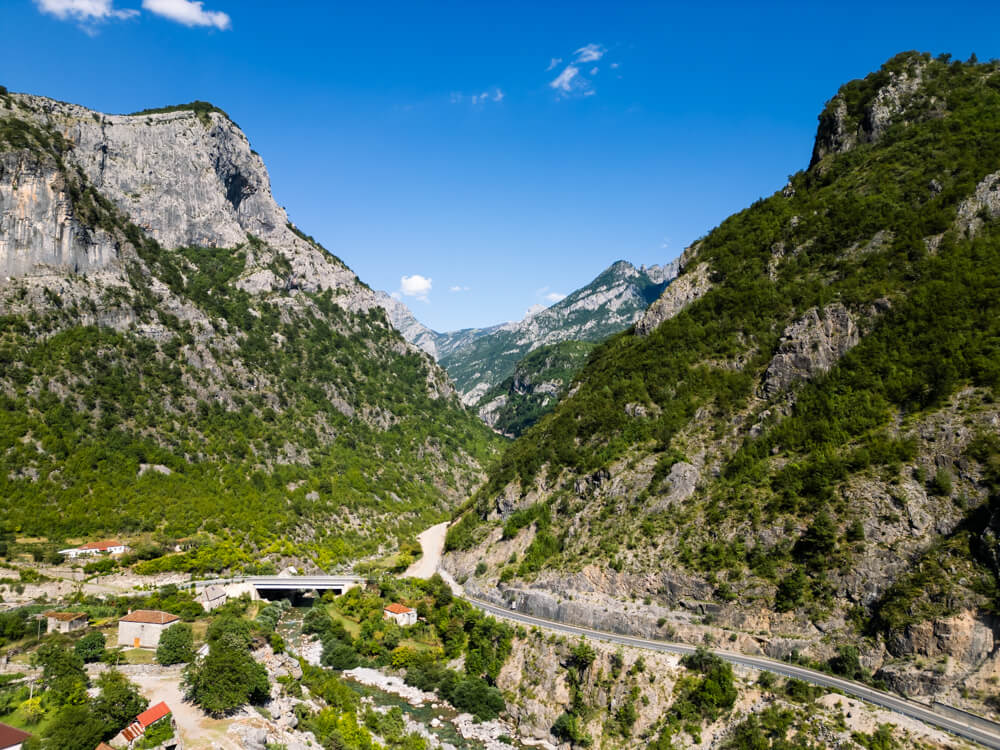
The SH20 is a scenic road in the far north of Albania, stretching about 60 km (37 mi) along the border with Montenegro. The road winds through the picturesque Kelmend Valley and offers awe-inspiring views of the tall mountains and alpine scenery around it. It’s even been dubbed the ‘Albanian Stelvio’ because of a specific section of the road called Leqet e Hotit, which has a series of sharp hairpin turns.
Even though the SH20 is quite narrow, it’s paved and in perfect condition, and offers a nice driving experience. Besides Leqet e Hotit, the main points of interest along this route are Tamara Beach and village, Selce Waterfall, Bashkimi Canyon and the villages of Lepushe and Vermosh.
Despite its undeniable beauty, not many people visit this part of Albania. We drove this road to get to Lepushe for our Maja e Vajushes hike, and barely met anyone along the way.
If you’re not planning to rent a car, you can see the SH20 and visit the attractions around it on this 3-day tour of the Kelmend region.
7) Go for a dip at Tamare Beach
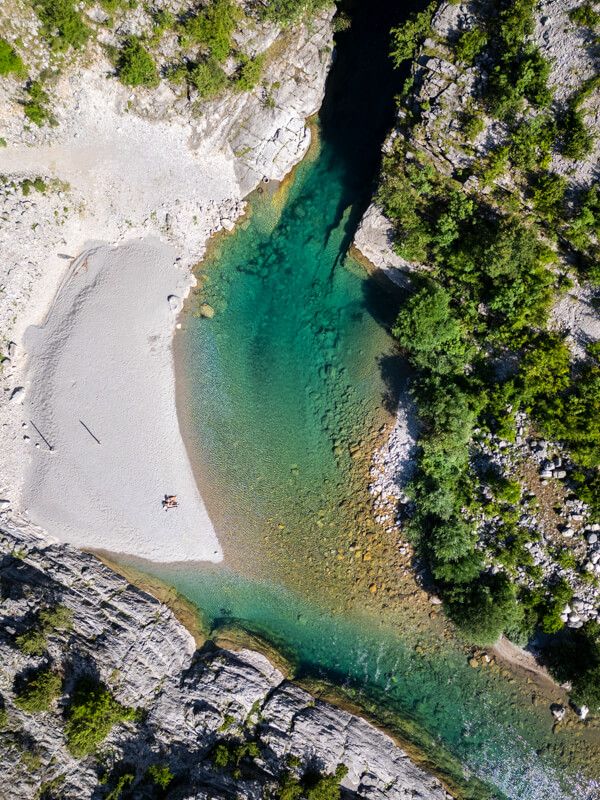
This river beach is located in the Kelmend region, just next to the SH20 road. I randomly stumbled upon this spot when scrolling through Google Maps, and it ended up being a wonderful surprise.
Surrounded by jagged peaks, this tiny pebble beach sits on the banks of a calm river with exquisite blue water. Since it’s a mountain river, the water is very cold, but so refreshing in the heat of the summer. It feels very off the beaten path, and barely anyone seems to visit it, so if you’re looking for a tranquil swimming spot in the Albanian Alps, this is it.
8) Visit Grunas Waterfall
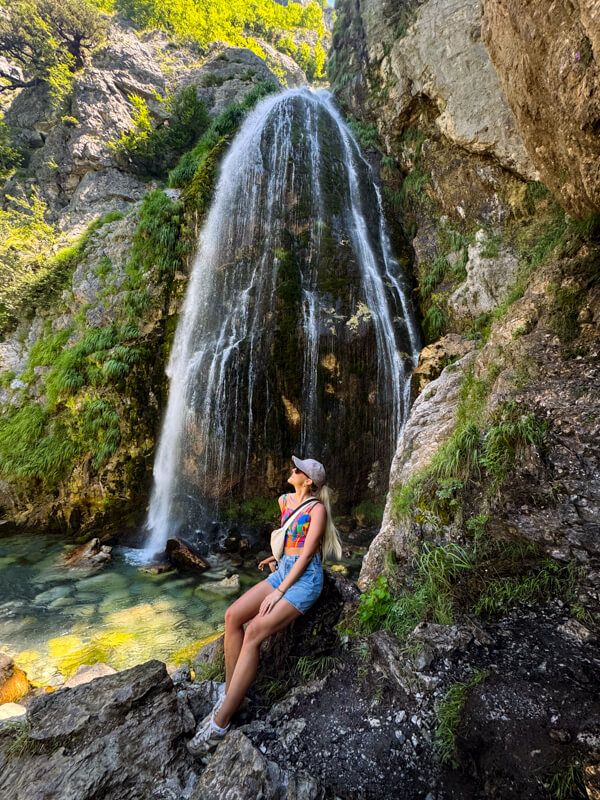
The 30 m (98 ft) tall Grunas Waterfall is another one of the most popular attractions in Theth. It’s an easy 40-minute hike from the center of the village along a mostly flat trail, except for the very last bit that’s quite steep. At the base of the waterfall, there’s a small pool where you can go for a swim.
We only stayed at the waterfall for a few minutes because it was very crowded during our visit, and there’s not much space to sit down or relax. If you want to see it when it’s less busy, come here outside the peak season or visit early in the morning. Overall, it’s a nice spot for a quick visit, but I wouldn’t say it’s a must-see.
Tip: At about halfway point of the trail, there’s a cute little cafe called Kunora e Grunasit set in a peaceful, quaint garden. It’s the perfect spot to grab a drink on your way back from the hike.
9) See Bashkimi Canyon
This limestone canyon is located near the village of Vermosh in northern Albania. Although I didn’t manage to visit it myself, it looks like a lovely swimming spot that’s surrounded by wild nature and barely receives any visitors. There’s a clear turquoise river that forms a natural pool where you can go for a dip, and a small waterfall that you can admire from a bridge.
10) Hike to Selca Waterfall
Another place that I wish I’d had time to visit is Selca Waterfall (Ujëvara e Selcës) in the Kelmend region. The waterfall is about 30 m (98 ft) tall and is surrounded by untouched nature and beautiful alpine scenery.
It takes about 1.5 hours to hike there along a rugged uphill trail that starts on the SH20 road, near a small school in Selca village. It’s a lesser-known spot, so it’s likely that you won’t meet any other visitors here.
Where to stay
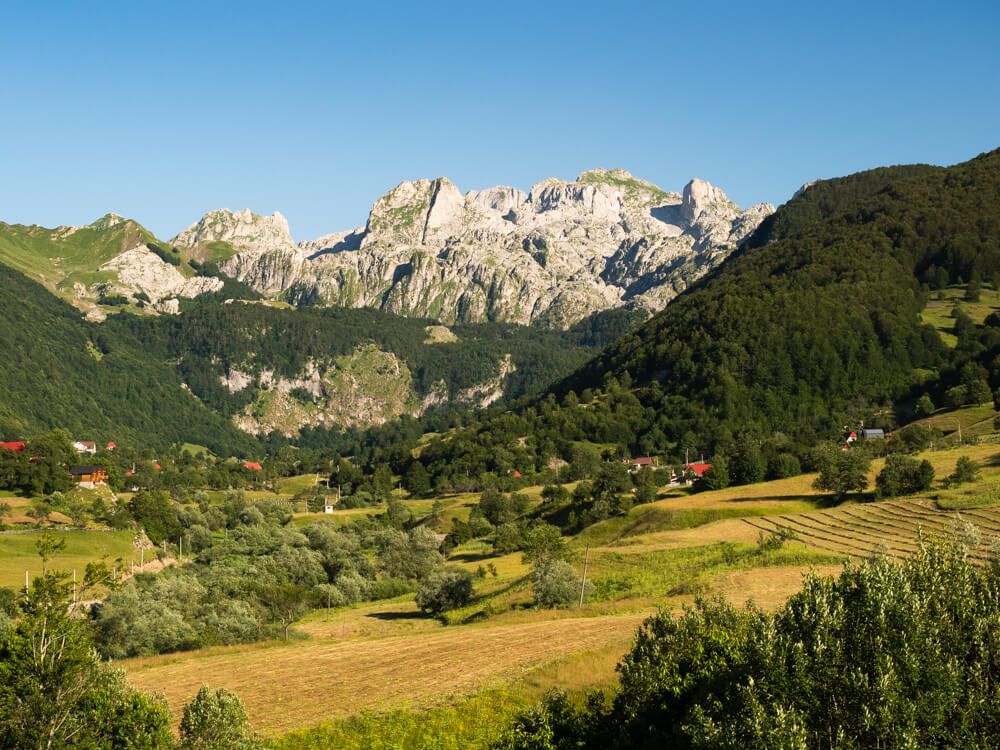
The three areas that I recommend staying in during your Albanian Alps trip are Lepushe (to explore the Kelmend region), Theth and Lumi i Shales. Most likely you’ll also have to spend a night in Shkoder between the different legs of your Albanian Alps trip.
Here are my picks for where to stay in each of these locations:
Lepushe: Guesthouse Alpini – A charming family-owned guesthouse located in an idyllic green valley with a spectacular view from its garden. The dinner we had here was the best Albanian food we ate on our trip.
Theth: SeSam Villas – Modern alpine-style cabins with stunning views of the mountains around them. Each cabin also has a terrace with a private plunge pool, where you can cool off after a day of hiking.
Lumi i Shales: Te Konaku – A beautiful traditional guesthouse in a breathtaking setting on the emerald waters of the Shala River with towering mountains around it. This place looks like something from a fairytale and sells out fast, so don’t wait too long to book it.
Shkoder: A Gallery Hotel – A modern hotel with bright and spacious rooms and a good location in the center of the town.
How long to stay
I’d recommend spending 5-7 days in the Albanian Alps. With 5 days, you can visit all three areas (Kelmend region, Theth and Lumi i Shales) and their main attractions, and go on a few hikes, but expect your days to be quite busy. 7 days would give you more time to relax or do even more hikes, depending on what you prefer, and provide some buffer time in case the weather’s bad.
Albanian Alps itinerary
Below is the 5-day Albanian Alps itinerary that we used for our own trip. To follow this exact itinerary, you need to rent a car.
|
DAY |
ACTIVITIES |
OVERNIGHT IN |
|
Day 1 |
Explore the Kelmend region |
Lepushe: Guesthouse Alpini |
|
Day 2 |
Hike to Maja e Vajushes, drive to Theth |
Theth: SeSam Villas |
|
Day 3 |
Visit Theth village, Blue Eye and Grunas Waterfall |
Theth: SeSam Villas |
|
Day 4 |
Hike from Theth to Valbona Pass and back |
Shkoder: A Gallery Hotel |
|
Day 5 |
Visit Komani Lake and Lumi i Shales |
Lumi i Shales: Te Konaku |
If you have more days, you can spend an extra night in Lepushe after the Maja e Vajushes hike and another night in Theth after the Valbona Pass hike.
However, if you’re not planning to rent a car, here’s the itinerary you can follow:
|
DAY |
ACTIVITIES |
OVERNIGHT IN |
|
Day 1-3 |
Vermosh |
|
|
Day 4 |
Transfer from Shkoder to Theth; visit Blue Eye and Grunas Waterfall |
Theth |
|
Day 5 |
Hike from Theth to Valbona Pass and back |
Theth |
|
Day 6 |
Transfer from Theth to Shkoder; explore the town of Shkoder |
Shkoder |
|
Day 7 |
Shkoder |
Be sure to also read my 10-day Albania itinerary post, where you’ll find more details about our travels in northern Albania as well as some amazing places we visited in the south.
Best time to visit
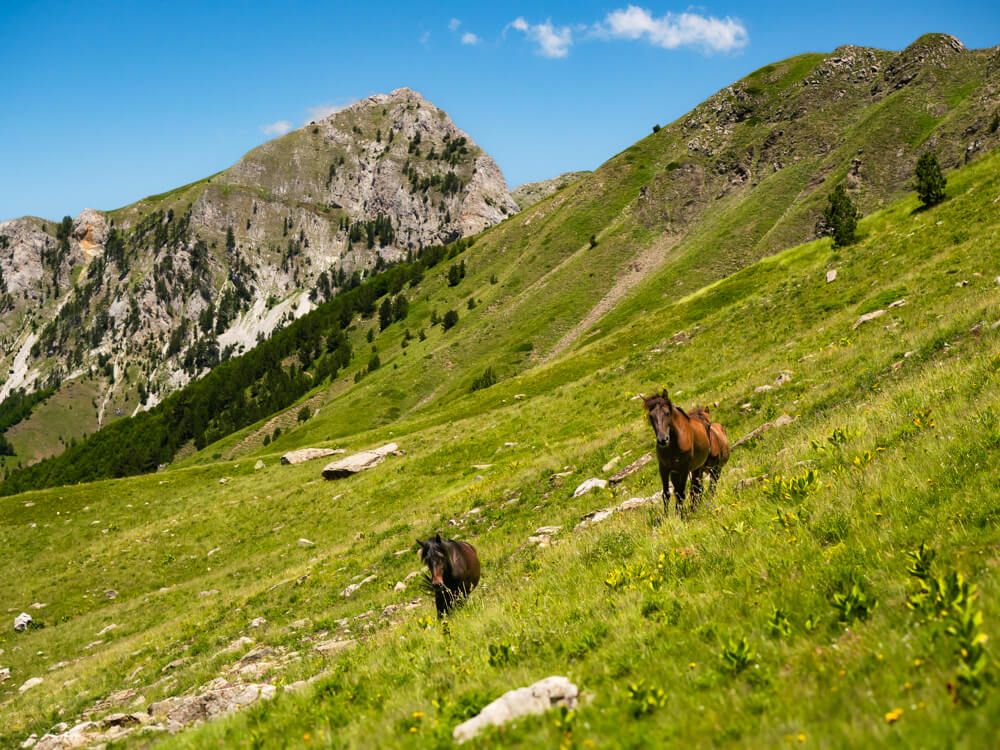
The best time of the year to visit the Albanian Alps is from mid-June to October. These are the perfect months to enjoy the outdoors because the weather is warm and sunny and the hiking trails are free of snow. Throughout the rest of the year, hiking is discouraged because snow and ice can make it treacherous.
With that said, the amount of snow can vary significantly from one year to another, so you might be able to hike in May without any problems. The best way to find out about trail conditions is to contact local hotels or guesthouses.
July and August are the busiest months in the Albanian Alps, with higher prices and more people on the trails. I visited in mid-July, and while there were plenty of tourists in Theth and at Shala River, it wasn’t too bad and didn’t feel overcrowded. In the Kelmend region, we barely saw anyone.
Final tips for visiting the Albanian Alps
- Shops: There are no supermarkets in the Albanian Alps, so you should buy everything you need in Shkoder or Tirana. There is a mini market in Theth, though, where you can find some basics.
- Drinking water: Tap water is not safe to drink in Albania. Instead of buying bottled water and contributing to the country’s waste management problems, get yourself a water purifier bottle. I have the Grayl Geopress and have used it for years throughout my travels.
- Mobile data: Albania is not a part of the EU, so your standard European data package will not work there. The easiest way to stay connected is to buy an eSIM. I used AirAlo, and it worked perfectly.
- Cash: More and more businesses accept card payments, but some guesthouses and restaurants still only take cash. Both Albanian lek (ALL) and euros were accepted everywhere we went. If you need to withdraw, there’s now an ATM in Theth, at Mini Market Jezerca.
- Language: Most locals I met in Albania spoke good English, but having the Google Translate app downloaded was helpful in the cases where they didn’t.
- Packing: Bring some long sleeves and long pants, because evenings and early mornings get chilly in the mountains, even in the middle of summer. Also bring water shoes for the rocky beach at Lumi i Shales.
- Gas: If you’re renting a car, I recommend fueling up in Shkoder before you head to the mountains. There is now also a gas station in Theth, but the prices are a bit higher than elsewhere.
- Multi-day trek: If you’re looking to do some long-distance trekking, you might be interested in the 192 km (119 mi) Peaks of the Balkans trail that connects the Albanian Alps with the mountains of Montenegro and Kosovo.
And now you’re all set to visit the Albanian Alps! I hope this post gave you some ideas and insights for planning your own trip and that you’ll have an amazing time exploring these majestic mountains.
If you have any questions, leave them in the comments, and I’ll get back to you.
Don’t miss my other Albania blog posts:
Heading to other Balkan countries? Then check out my Slovenia and Greece travel guides.
Pin this Albanian Alps travel guide!
READ MORE: